
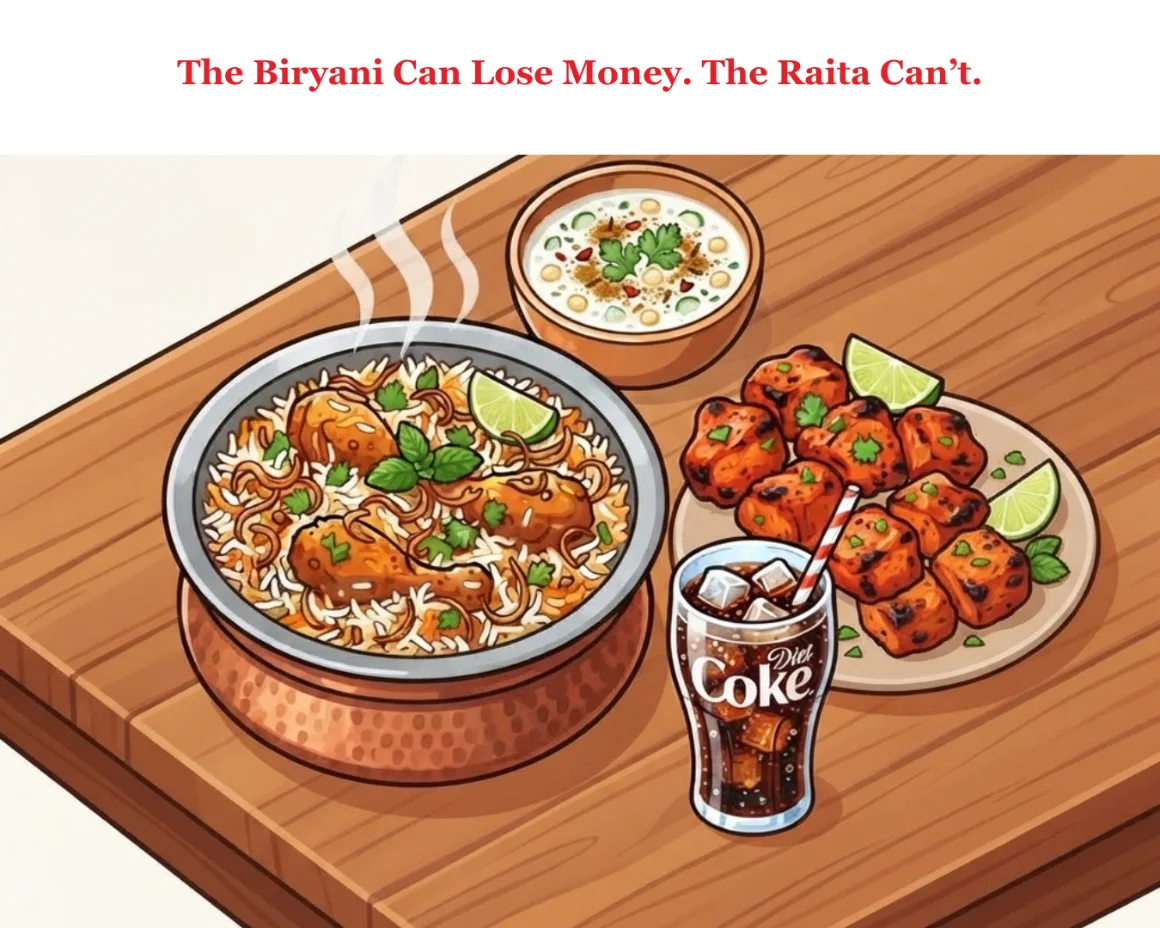
It’s Friday night. Your restaurant is packed, and table after table is ordering the same thing: Your ₹199 biryani.
The kitchen is flat out, the reviews are glowing, and people keep telling their friends you’re “so value for money.”
Now open the books.
The ingredients might cost ₹85 a plate. Great. But add your share of rent, electricity, gas, staff salaries, packaging and the dishwasher running until 2 a.m., and that biryani could actually be costing you ₹210.
Your bestseller is losing money.
And honestly? That might be fine.
You’ve seen this everywhere.
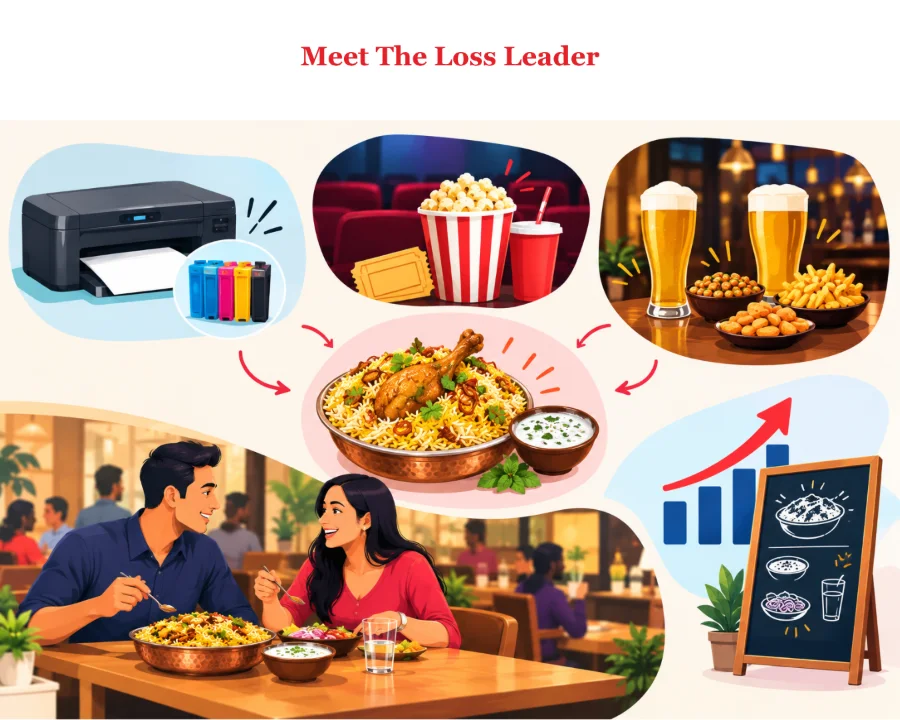
Printers are sold cheap because the ink is where the money is. Movie tickets feel reasonable until you’re paying ₹400 for popcorn. Bars run ₹99 happy-hour pints knowing nobody stops at one — they’ll order the chakna, fries and another round too.
A loss leader is the product that gets people through the door.
And because customers tend to remember the few prices they notice, a great-value hero dish can make your entire menu feel fairly priced.
There’s psychology behind this too.
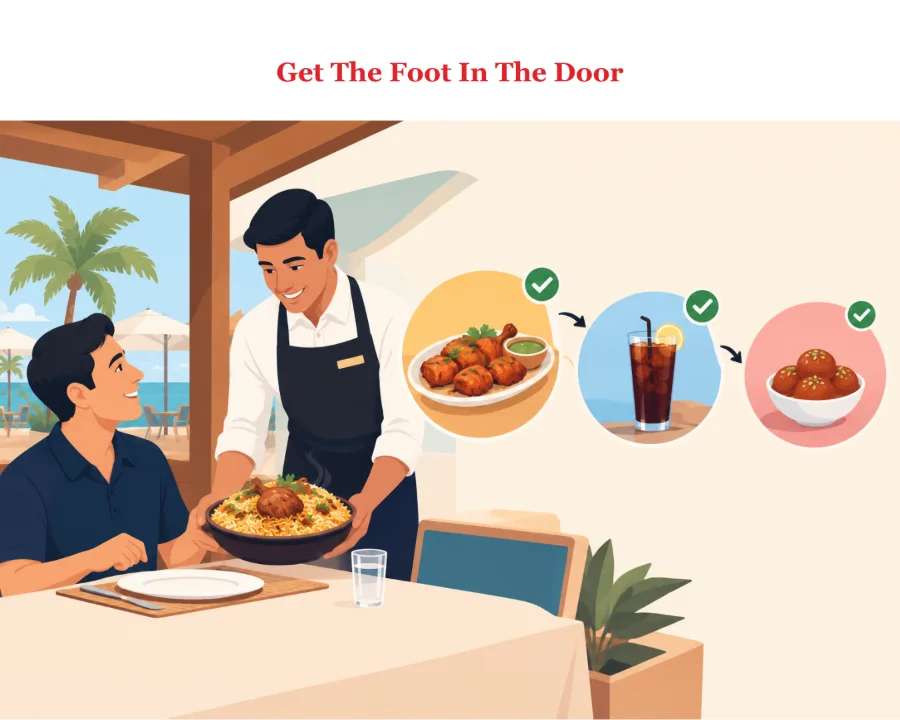
Once someone has said yes to something small, saying yes to the next thing can feel easier. It’s known as the foot-in-the-door effect.
The biryani gets them to the table. Then comes the chicken tikka, Diet Coke or gulab jamun. Each extra feels like an easy decision.
This is where many restaurants slip.
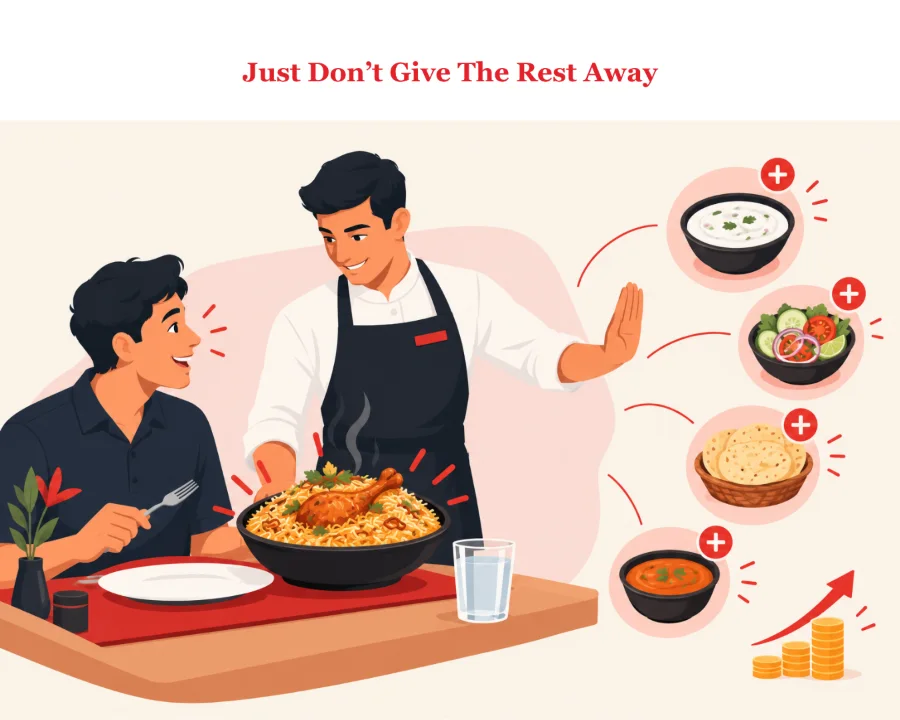
They price the hero dish low and then give away the extras.
Extra raita. A second bowl of salad. More papad. “Thoda aur” gravy.
Each one feels small, but together, they can eat into your margins.
Those extras matter. Your rent, gas and staff costs are already being paid for, so additional paid items can contribute significantly toward covering your overall costs.
And guests rarely blink at ₹30 for extra raita when the biryani already feels like a steal.
Let the hero dish win them over. Let everything around it help pay the bills.
Most restaurants don’t — at least not until they sit down and do the math.
Our Food Cost Calculator helps you work out your real food costs in minutes.
Work out your real food costs →