Suggestive Selling vs Upselling vs Cross Selling: The Simple (and Surprisingly Funny) Difference — Explained Like You’re 12

Ever wondered how you went from buying “just a coffee” to walking out with a pastry, upgraded size, and mild financial regret? That’s the quiet magic of Suggestive Selling, Upselling, and Cross Selling. These sales techniques are everywhere — from restaurants to online shopping carts — and while they sound similar, they’re actually very different tricks. Let’s break them down in plain English (with a few laughs along the way).

Let’s be honest: Most people encounter advanced sales techniques not in MBA classrooms, but while standing hungry at a counter or clicking “checkout” online at 1:47 AM.

Somewhere between “I’ll just get fries” and “Fine, give me the family-sized bucket,” you’ve been gently, expertly, and sometimes shamelessly guided into spending more money than originally planned.

Welcome to the charming world of Suggestive Selling, Upselling, and Cross Selling — three sales strategies that sound like corporate jargon but are actually part of everyday life.

Let’s break them down like civilized humans.

Words by
Tsunami Costabir

Date
25-2-2026

Reading Time
03 min read

Suggestive Selling vs Upselling vs Cross Selling: The Simple (and Surprisingly Funny) Difference — Explained Like You’re 12

Suggestive Selling: The Friendly Nudge

Suggestive Selling is the polite, helpful, almost caring cousin of sales tactics. It’s the “Hey, you might like this” approach.

Imagine you walk into a coffee shop.

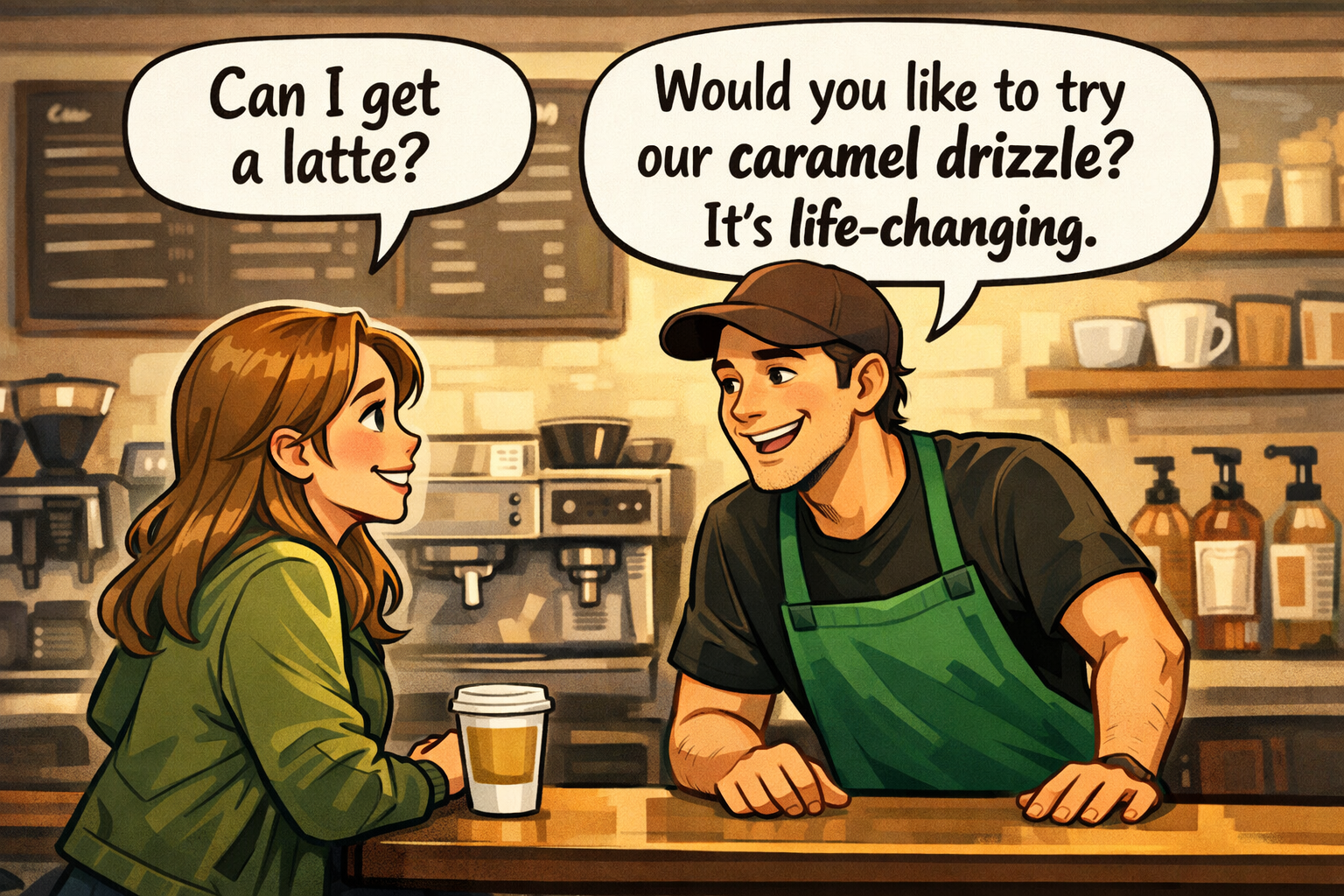
You: “Can I get a latte?”

Barista: “Would you like to try our caramel drizzle? It’s life-changing.”

Notice the tone. No pressure. No guilt. Just a gentle suggestion wrapped in optimism.

The goal isn’t to aggressively increase your spending. It’s to enhance your experience — ideally while enhancing revenue.

It’s sales with a smile.

Upselling: The Upgrade You Didn’t Know You Needed

Upselling is where things get interesting. This is the “What if you spent more… but felt better about it?” strategy.

You’re not being offered something extra. You’re being offered something better.

Fast-food classic:

You: “I’ll have a small soda.”

Cashier: “For just 20 rupees more, you can get a large.”

Suddenly you’re faced with a philosophical dilemma:

Am I a rational adult… or someone who respects value?

Upselling thrives on that internal debate.

It appears when:
  • Airlines say, “Would you like more legroom?”
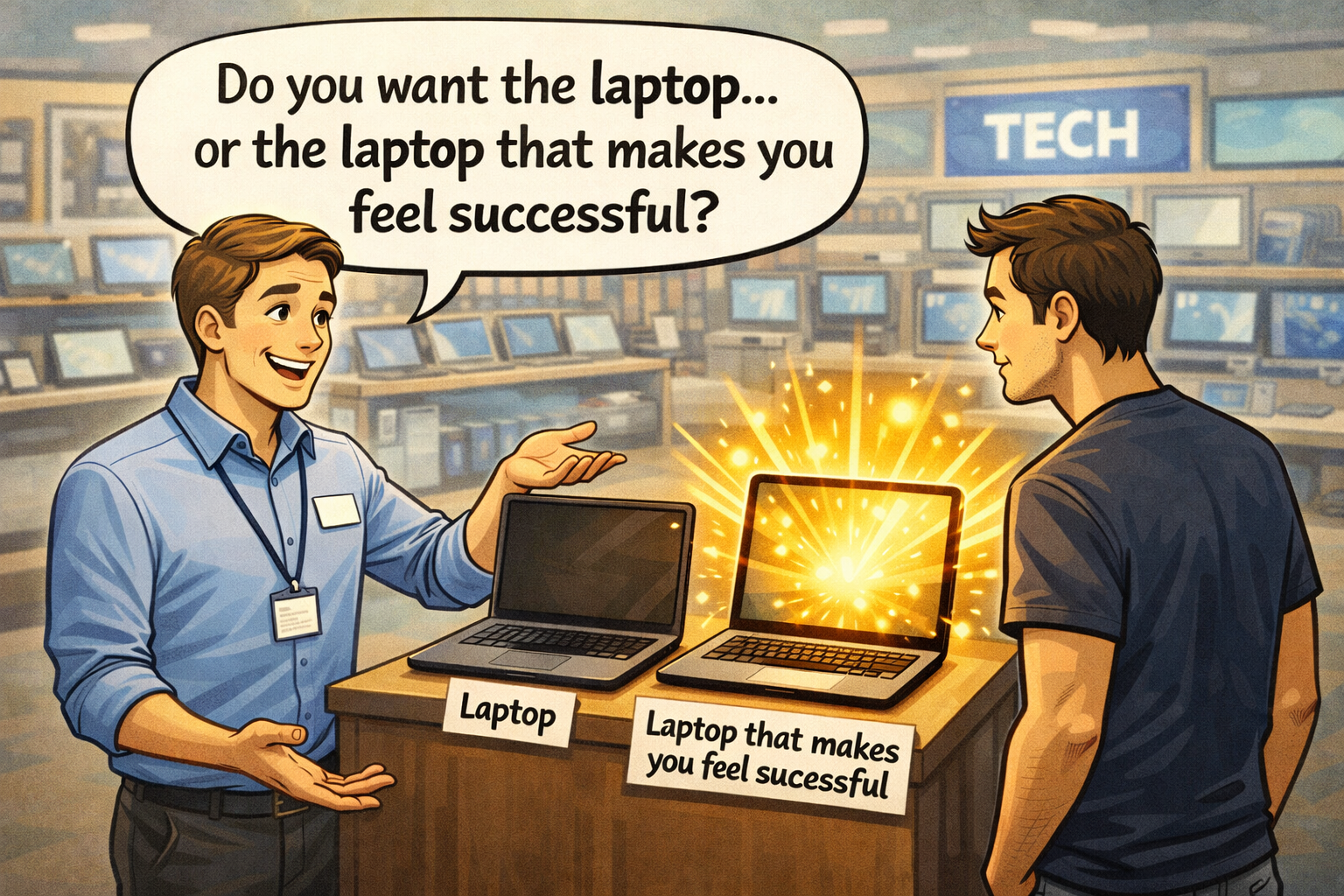
  • Tech stores ask, “Do you want the laptop… or the laptop that makes you feel successful?”
  • Streaming services whisper, “Upgrade to Premium so you can continue watching shows, without ads, in 4k.”
Upselling works because humans love upgrades. We are biologically wired to want “the better version.”

Cross Selling: The ‘Perfect Pairing’ Trick

Cross Selling is the art of saying, “That thing you’re buying? It has a soulmate.”

You’re buying one product. The seller introduces its companion.

You: “I’ll buy this phone.”

Salesperson: “Excellent choice. You’ll also need a case, screen protector, wireless charger, backup charger, car charger, portable charger, and perhaps insurance for the charger.”

Cross Selling is everywhere:
  • “Would you like fries with that?”
  • “Customers who bought this also bought…”
  • “That shirt would look great with these pants, shoes, belt, jacket, hat, watch, sunglasses, and a new identity.”
The magic of Cross Selling lies in logic.

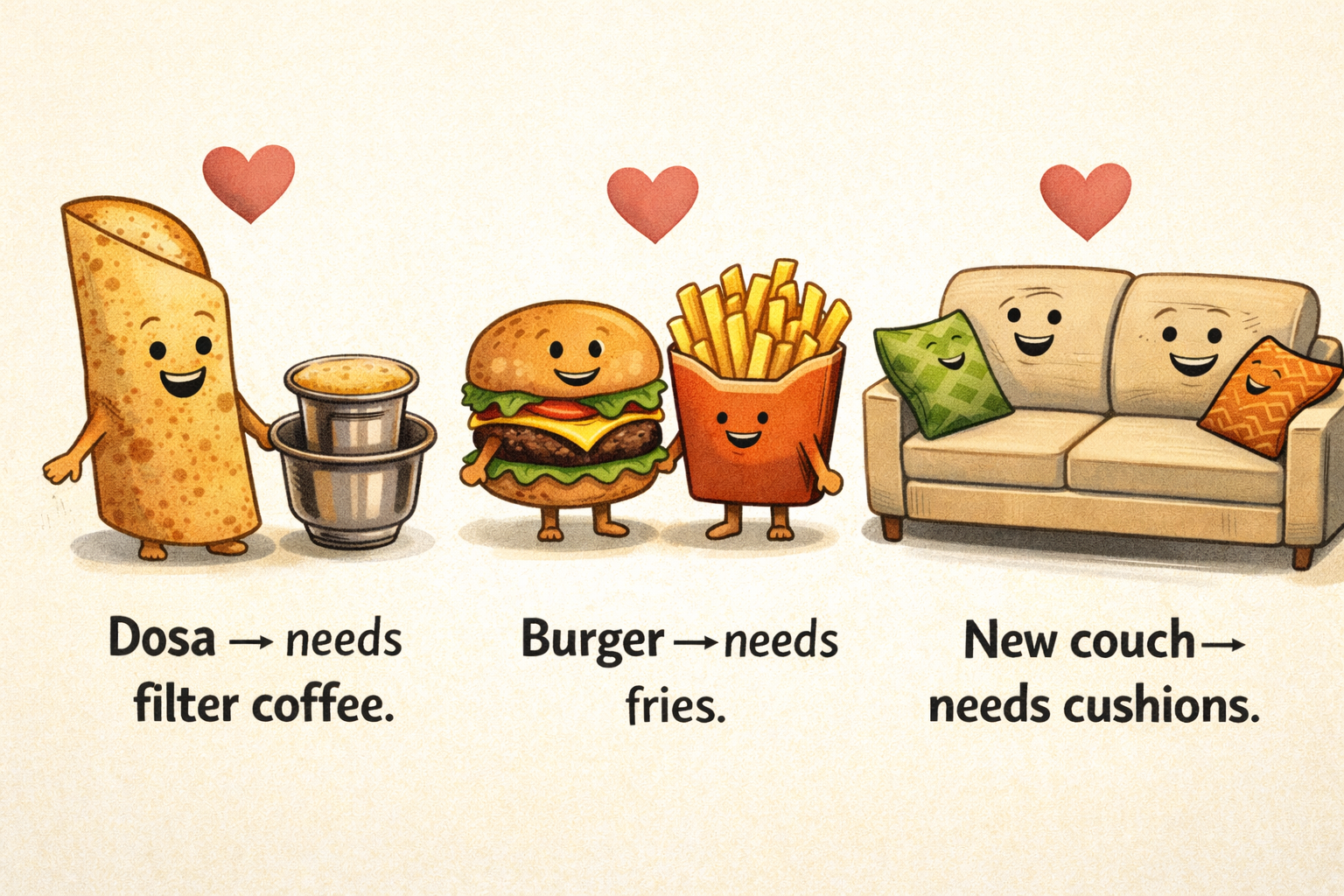
Dosa → needs filter coffee.

Burger → needs fries.

New couch → needs cushions.

It feels less like spending more, and more like completing a set. Humans love completion.

So What’s The Simple Difference?

If we strip away the corporate polish:

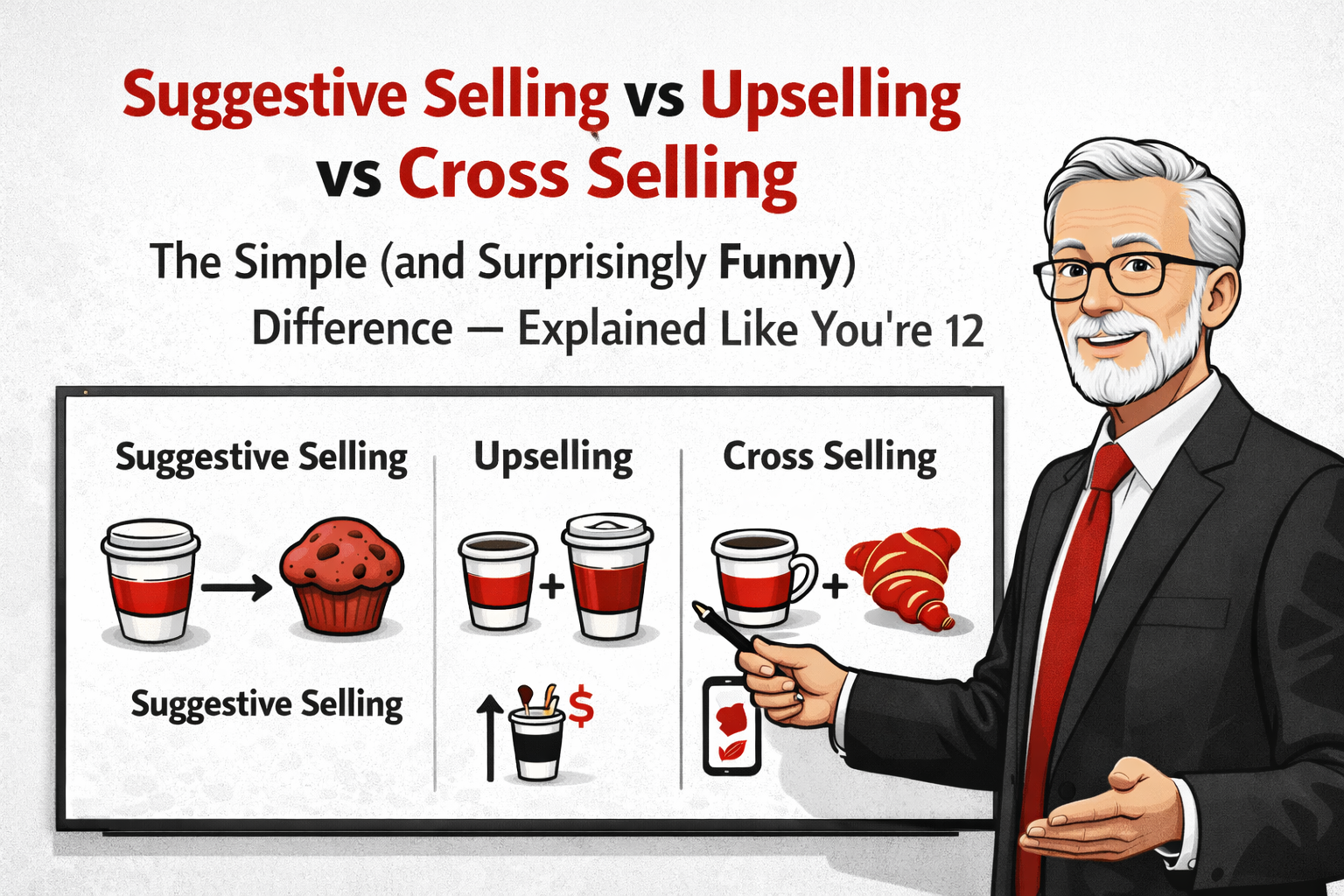
Suggestive Selling = “You might enjoy this.”

Upselling = “You might enjoy a better version.”

Cross Selling = “You might enjoy something that goes with that.”

That’s it. No spreadsheets required.

Even parents are masters of it.

Kid: “Can I have a cookie?”

Parent: “How about an apple?” (Suggestive Selling)

Kid: “No.”

Parent: “Fine. Apple with peanut butter.” (Cross Selling)Kid: “Still no.”Parent: “Okay. Cookie after vegetables.” (Upselling disguised as negotiation)

Sales psychology is really just human psychology wearing a name tag.

Share this blog to your favorite platform: